Difference between Garnet and other abrasives
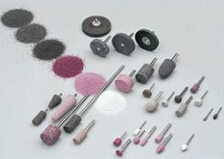
Zhongsen Editor 2026-07-20Natural Emery, also known as Garnet Sand, is a silicate mineral. Abrasive materials made by hydraulic separation, mechanical processing, screening and classification, etc. It has a long history of production and use. In ancient my country, there were historical examples of using emery to grind crystal glass and various jades. In the 1940s, it was exported to the East. It is divided into three categories: coarse, medium and detailed. The coarse mesh is black and red, the middle mesh is light red, and the fine mesh is red and white. All mesh sizes are uniform in particle size and particle shape. The branches are called angular crystals, with sharp edges and high cutting force. For stone industry grinding marble and other soft materials. Glass industry grinding and grinding burrs, TV picture tubes, optical instruments, lenses, prisms, glass for watches and clocks, etc. Metal industrial sandblasting, rust removal, grinding. Grinding offset plate in printing industry, and light industry processing plastic samples, leather, sandpaper, etc.
The grinding force of natural emery is lower than that of electric furnace mouth corundum, but it is strong willful and has the characteristics of shell-shaped section jade. The grinding surface is fine and uniform, which can improve product quality and is the unique feature of emery. Natural emery has short grinding time, high efficiency and low price, which can make up for the short lifespan. Garnet Sand is suitable for sandblasting, rust removal, polishing and other purposes.
Characteristics of Garnet Sand: Due to the performance advantages of minerals, such as high hardness, good toughness, high specific gravity, and no harmful substances, Brown Fused Alumina is a kind of natural environment-friendly grinding raw material, which plays an important role in the international blast cleaning industry. Replayed role.
Used as abrasive media accounts for 45% of all industrial usage. It can be seen that Garnet Sand is being more and more recognized in the blast grinding industry. It is usually used as a blasting medium, and people require that Garnet Sand is made of iron-aluminum garnet, because iron-aluminum garnet is composed of different main end members, which can meet the industry's requirements for hardness. Among various blast abrasives, the advantages of Garnet Sand mainly include the following.
1. Less dust
Garnet Sand is used for surface blasting treatment, because its specific gravity is relatively high, so less dust is generated during the blasting process. This ensures operator health and safety and improves operator visibility. Compared with slag (cold water or even sea water is used for high temperature cooling during the formation of slag, so it forms a broken water phase structure and is brittle), because slag is relatively brittle, it is easy to be crushed during the jet grinding process to form small particles. particles. Due to the relatively small specific gravity of slag, small slag particles are suspended in the air, causing environmental pollution. Likewise, quartz sand is a very brittle abrasive.
2. High efficiency
Garnet Sand, under a certain pressure, can quickly hit the surface of the object with sharp edges and corners, so it is regarded as a very fast blast grinding method. The acceleration and velocity of particles in the airflow are a function of inertia and particle size. The smaller the particles, the easier the acceleration and therefore the higher impact on the surface, resulting in a very high cleaning rate - typically 52/hr) twice as fast as other conventional abrasives of three.
3. Low loss
The unique particle size of Garnet Sand ensures that more effective particles hit the surface of the object (such as 30V0 mesh sand, which can produce 11 million particles per kilogram to hit the surface of the object, while conventional slag such as 20 mesh can only produce 1 million particles to hit the object. surface), so the use of garnet can greatly reduce the wear and tear of abrasives - usually saving 1/3 of conventional abrasives.
4. High quality surface treatment
During the blast grinding process, Garnet Sand can penetrate deep into the cavities and pits on the surface and reach the bare surface of the metal, so it can completely remove all rust, water-soluble salts and other contaminants. The treated metal surface is very clean and free of embedded substances, and can easily meet the SIS standard SA3 level. A smooth surface profile with uniform peaks of 50-75 microns per unit area can be easily achieved. Relatively speaking, because the rough and sharp edges and corners of rough slag (such as copper slag, silver wash, etc.) are easily left on the surface of the steel after spray grinding, there are about 500 grains left on the square meter, which leads to the initial coating. Layer failure and poor coating effect.
5. Environmental protection
Different from the conventional abrasive blasting material, corundum is a kind of pure natural non-toxic mineral. It does not contain harmful substances such as silica that cause silicosis, and does not contain toxic heavy metals or radioactive pollutants. During operation, due to the relatively large specific gravity of the product, little dust is generated, which effectively ensures the health of the operator. In addition, the low consumption and recyclability of the product can greatly reduce the amount of waste disposal and cost after the product is used.
6. Recyclable
Garnet Sand is very suitable for a variety of fields. Under normal circumstances, it can be used 5-10 times for heavy laughs. The number of cycles can be more if it has not lost its cutting ability after 10 cycles. After no cutting ability, brown fused alumina can also be recycled to the construction industry as a cement additive.
At present, the international price of garnet is in the middle price range. Because the performance and other aspects are much higher than that of slag abrasives, and the price is much lower than that of high-value abrasives, garnet abrasives are extremely cost-effective.
Garent Sand is widely favored by the international jet mill industry for its superior performance and affordable price. Currently, it is mainly used in the following major industries:
* Shipbuilding, ship repair industry, refinery, warehouse maintenance and equipment installation
*Chemical plant construction and maintenance, old nuclear and thermal power plants, drainage plants and gas plants, desalination plants, industrial plants
* Construction and maintenance of containers, box trucks, train containers, coaches
* Aircraft industry, maintenance including non-ferrous surfaces and turbine blades
*Sculpted objects such as glass, granite, marble and building cleaning, construction industry and steel structures
*Used for high pressure water jet cleaning equipment
To sum up, corundum is an ideal, efficient and environmentally friendly abrasive blasting material, and it is worth trying to use by the majority of enterprises. Currently widely used in sandblasting, rust removal, optics, electronics, building materials, machining, instrumentation, instruments, printing, grinding, stone, rubber, hydraulic jet and cutting industries. Especially in the past 10 years, the use of Garnet Sand as pressure filtration in water plants to replace quartz sand or gravel is an emerging application material in the field of non-abrasive applications.